
Basement Flood Prevention & Hydrostatic Relief for St. Louis Properties
In Greater St. Louis, geographic positioning between the Missouri and Mississippi river systems creates formidable hydrological conditions for residential basements. Heavy Midwest spring cloudbursts, severe severe thunderstorm squalls, and winter snowmelt saturate the regional clay-heavy soil. When soil becomes waterlogged, subterranean water generates immense hydrostatic pressure against your home's foundation walls and basement floor slab.
Without an operational, properly sized sump pump system, water seeks the path of least resistance—seeping through floor cracks, cold joints, and cove joints between the wall and floor. Just two inches of standing water in a finished basement can cause upwards of $15,000 to $45,000 in structural damage, destroying carpet, baseboards, drywall, furnace equipment, water heaters, and personal keepsakes, while fostering dangerous toxic black mold (Stachybotrys chartarum) within 48 hours.
Through Koo Plumbing, connecting with an experienced, licensed drainage and plumbing contractor is immediate. Dialing +1 314 648 0564 connects you directly with on-call technicians equipped with commercial-grade submersible sump pumps, smart dual-battery backup systems, quiet check valves, and freeze-proof discharge solutions across St. Louis City and County.
- Continuous Running or Constant Cycling: The motor hums endlessly even in dry weather, indicating a jammed float switch, undersized pump capacity, or failed check valve.
- Loud Grinding, Screeching, or Clunking Sounds: Worn motor bearings, a bent impeller shaft, or foreign gravel debris rattling inside the pump volute.
- Basement Water Rising While Pump Runs: Clogged suction screen intake or a broken impeller preventing water from being expelled up the discharge pipe.
- Electrical Tripping at the Breaker Panel: The pump motor draws excessive amperage due to an internal electrical short or seized windings, repeatedly tripping your circuit breaker.
- Severe Vibration During Operation: Unbalanced impellers that shake discharge PVC piping, loosening joint solvent welds and causing indoor spray leaks.
Comprehensive Sump Pump Solutions We Connect You With
Independent plumbing professionals provide end-to-end drainage solutions to protect every square foot of your basement or crawlspace:
1. Commercial-Grade Submersible Sump Pumps
Unlike noisy, exposed pedestal pumps whose motor rests above the pit, modern submersible sump pumps are engineered to operate completely submerged beneath water at the base of the basin. The surrounding water naturally cools the high-torque electric motor during continuous operation, significantly extending mechanical longevity and dampening operating noise.
Contractors install premium cast iron and stainless-steel submersible pumps (ranging from 1/3 HP to 3/4 HP) with vortex non-clog impellers capable of passing solids up to 1/2-inch in diameter. Units feature heavy-duty vertical solid-float mechanical switches that resist sticking, outlasting standard mercury or tethered floats. If water backup has caused drain stoppages, see our Drain Cleaning & Rooter Services guide for main stack clearing.
2. Dual Battery Backup Sump Pump Systems
The most critical vulnerability of any standard electric sump pump is its absolute dependence on your home's 120V AC electrical grid. Severe thunderstorms, microbursts, and ice storms in Eastern Missouri frequently knock out power lines precisely when groundwater inflow is at its absolute maximum.
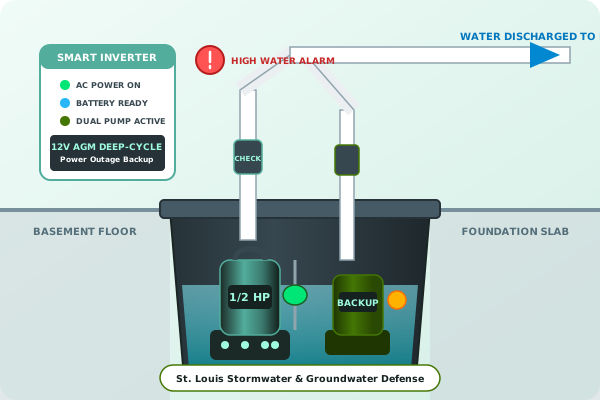
A battery backup sump pump system operates as an autonomous secondary defense. Equipped with a dedicated 12V DC auxiliary pump staged slightly higher in the pit, smart microprocessor charging inverter, and deep-cycle AGM maintenance-free marine batteries, the system activates automatically the instant main power drops or the primary pump fails. Modern backup units feature Wi-Fi alert modules that send real-time text message warnings directly to your smartphone.
3. Water-Powered Emergency Backup Sump Pumps
For homes connected to reliable municipal water supply (such as Missouri American Water), water-powered backup sump pumps offer a maintenance-free alternative to battery banks. Utilizing the Venturi suction principle, these pumps harness municipal pressurized water flow to suction and expel basement groundwater without requiring any electricity or battery replacements. Because there are no batteries to degrade over time, water-powered pumps provide unlimited runtime during multi-day storm power outages.
4. Quiet Spring-Loaded Check Valves
Every time an ordinary sump pump cycles off, the entire vertical column of water inside the discharge pipe slams downward against the flapper, producing an annoying loud bang (hydraulic water hammer) that echoes through the house. Contractors install premium spring-loaded silent check valves with rubber-flapper dampening that eliminate water hammer noise and prevent backflow into the basin, cutting pump cycles in half.
5. Freeze-Proof Exterior Discharge Lines (IceGuard System)
Pumping water out of your basement is only half the battle; where that water goes determines whether your home stays dry. Contractors install underground 1.5-inch to 3-inch PVC discharge lines that transport water 15 to 30 feet safely away from your foundation to a daylight pop-up emitter. To prevent catastrophic winter freeze-ups when snow and ice block the line, technicians incorporate patented freeze-relief escape fittings that automatically vent water onto the ground if the buried conduit ever freezes. For urgent structural water crises, our 24/7 Emergency Plumber team is on call around the clock.
Sump Pump System Comparison Matrix
Review key mechanical specifications to select the optimal configuration for your basement:
Homeowner Sump Pump Pre-Storm Testing Checklist
Before spring storm season arrives in St. Louis, perform this simple 5-step maintenance check:
- Check Power & GFCI Status: Ensure the pump cord is firmly seated in an operational GFCI outlet and the test button has not tripped.
- Conduct the 5-Gallon Bucket Test: Slowly pour a 5-gallon bucket of water into the sump basin. The float should lift smoothly and the motor should engage immediately without hesitation.
- Verify Rapid Evacuation: The pump should clear the water within 5 to 10 seconds, leaving roughly two inches of water at the bottom, and shut off automatically.
- Test Battery Backup Readiness: Unplug the primary pump from the wall and pour another bucket of water into the pit to verify the auxiliary battery backup activates and sounds its audio alert.
- Clear Exterior Discharge Outlets: Walk outside to ensure the exterior discharge opening is free of packed dirt, mulch, ice, or rodent screens that could choke flow.
Sump Pump Installation Across Greater St. Louis Communities
Contractors deliver rapid response and routine installations throughout St. Louis City and St. Louis County:
Frequently Asked Questions About Sump Pumps in St. Louis
A high-quality cast iron submersible sump pump typically lasts between 7 to 10 years with regular maintenance. However, because St. Louis experiences frequent spring downpours and high groundwater tables near the Missouri and Mississippi river valleys, pumps that cycle continuously may require replacement every 5 to 7 years.
Yes, a battery backup sump pump is strongly recommended for every finished basement in St. Louis. Severe thunderstorms that bring torrential rainfall frequently knock out municipal electrical grids. Without battery backup protection, your primary pump cannot run, leaving your basement completely exposed to catastrophic flooding precisely when water inflow is highest.
Continuous running is usually caused by a stuck or tangled float switch, a broken check valve that allows pumped water to backflow into the pit, an undersized pump unable to outpace underground spring flow, or an active underground water main or irrigation pipe leak near your foundation walls.
Most standard St. Louis residential basements require a 1/3 HP or 1/2 HP submersible sump pump. Homes with deeper basements, high hydrostatic head pressure (pumping water upward 10 feet or more), long horizontal discharge runs, or active subsurface water flows generally require a heavy-duty 1/2 HP or 3/4 HP commercial-grade cast iron unit.
A check valve contains an internal spring-loaded flapper that only opens in the direction of outward water discharge. When the pump shuts down, the flapper snaps shut, preventing gallons of water trapped in the vertical discharge pipe from flowing back down into the basin. This stops short-cycling and doubles the motor's operating life.
Yes. During freezing St. Louis winter cold snaps, snow and ice can seal the exterior pipe exit. If water inside the line freezes, subsequent pumping attempts are blocked, forcing the pump motor to burn out or causing water to overflow the indoor sump pit. Technicians install freeze-relief fittings (such as IceGuard) that automatically vent water outside even if the buried line is frozen.
Explore Additional Plumbing Solutions in St. Louis
24/7 Emergency Plumber
Immediate 24-hour dispatch for basement flooding, sump pump failure, burst pipes, and sudden sewer backups.
Drain Cleaning & Rooter Services
Hydro jetting, camera inspection, and mechanical snaking for basement floor drains and main sewer stacks.
Water Filtration & Softener Systems
Whole-house carbon filtration, ion-exchange softeners, and reverse osmosis systems to protect household plumbing and appliances.