
What MSD Project Clear Means for Your Basement
Project Clear is the Metropolitan St. Louis Sewer District's long-term program to cut sewer overflows and basement backups across the region. It grew out of a $4.7 billion consent decree, originally scheduled over 23 years, and most of the money goes into tunnels, storage and bigger pipes you'll never see.
That underground work helps the whole system. It does not, by itself, protect your house next spring. Older homes in South City, Dogtown, Webster Groves or University City can still take on sewage when a heavy storm overloads the main. The fix at the house level is usually a backup prevention device: a backwater valve, a standpipe, a floor-drain plug or an overhead sewer conversion.
Backwater Valve Rules: The Upstream Manhole Test
Whether you need a backwater valve comes down to one measurement: the height of your lowest fixture compared with the cover of the next manhole upstream on the public sewer. The International Plumbing Code (Section 714.1) and St. Louis County's plumbing code both work off that line.
Fixtures above the upstream manhole cover
These drain by gravity straight to the sewer and must not run through a backwater valve. That's why a plumber won't put your whole house behind one valve. If the valve closed during a surge, your upstairs toilets would empty into your own basement.
Fixtures below the manhole cover but above the sewer crown
This is the typical St. Louis basement: a floor drain, laundry tub or basement bathroom. These fixtures may drain by gravity through a backwater valve, or as the local code official directs.
Fixtures below the crown of the sewer
If a fixture sits lower than the top of the public sewer pipe itself, gravity can't do the job. Code calls for an approved pumping system, such as a sewage ejector, that lifts the waste up into the building drain.
In unincorporated St. Louis County, plumbing permits go through the Department of Transportation and Public Works. The City of St. Louis and most incorporated municipalities run their own plumbing permits and may amend the model code, so confirm the rule with your local office before work starts.
MSD's Sewer Backup Prevention Program: Who Qualifies
MSD runs a Sewer Backup Prevention Program for customers with a history of building backups caused by MSD issues. For approved properties, MSD pays for plumbing modifications that protect against future backups and then maintains and repairs the devices it installs.
Three conditions matter more than anything else:
- The cause has to be MSD's sewer. Backups from a cracked or root-filled private lateral don't qualify. Your lateral is your responsibility, and clay sewer pipe collapses are a common culprit in older homes.
- History counts. A single backup is handled as a claim (see below). The prevention program is aimed at repeat problems.
- Start with MSD. MSD says it does not reimburse private plumber services or work that wasn't started through its Customer Care Center. Call (314) 768-6260 before you hire anyone for a permanent fix.
If your problem turns out to be the private lateral, look at the St. Louis County Sewer Lateral Program instead.
Backwater Valve vs. Other Backup Prevention Devices
MSD lists several devices. Each one solves a slightly different problem.
| Device | What It Does | Good Fit | Trade-off |
|---|---|---|---|
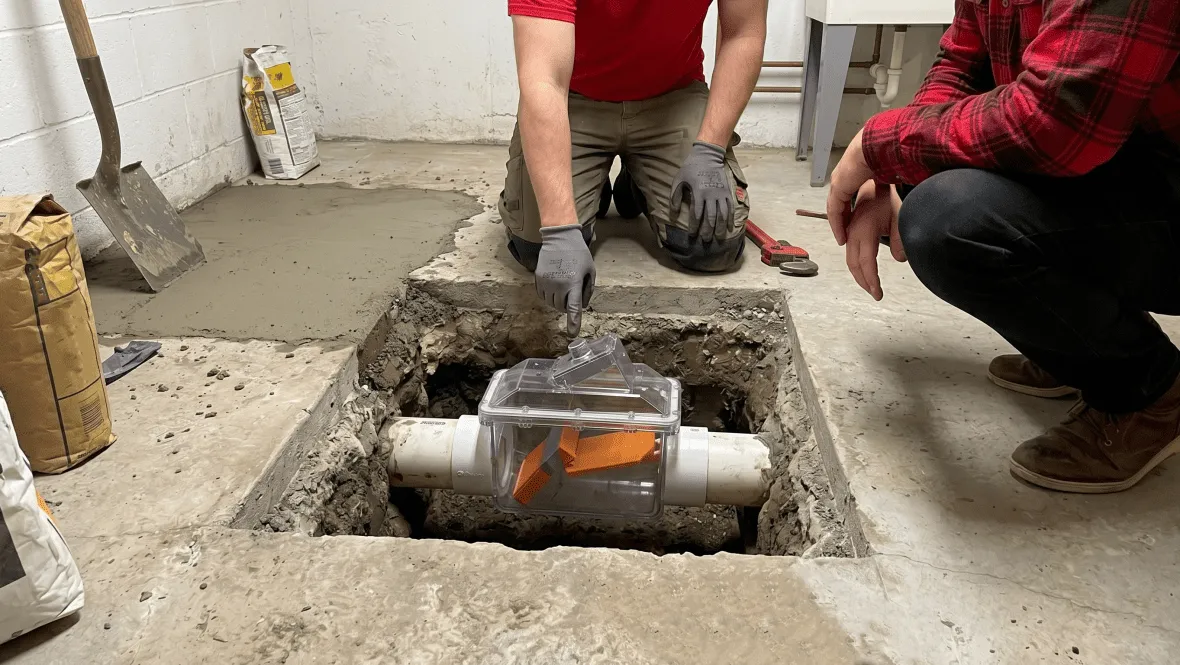
| Backwater valve | A gate in the lateral lets sewage leave but not come back in | Basements with fixtures between the manhole cover and sewer crown | Needs periodic checks; basement fixtures can't drain while it's closed |
| Standpipe | A pipe threaded into the floor drain holds back rising water | Low-cost stopgap for a single floor drain | Covers only that drain; must be in place before the storm |
| Floor-drain plug | A float plug seals the drain as water rises | Inexpensive, simple to fit | Pressure can push water out of another opening |
| Overhead sewer | Basement waste is pumped up to an overhead line, then flows out by gravity | Repeated, severe backups | Highest cost; needs a pump and power |
Our take: if MSD has confirmed repeat backups from its main, push for the full prevention program before spending your own money. If backups are rare and you want peace of mind, a properly sized backwater valve installed under permit is the most reliable single fix for a typical St. Louis basement.
What MSD Pays After a Backup
If an overcharged MSD sewer sends water into your building, MSD's financial assistance for building backups lists reimbursement of up to $3,000, minus a $100 deductible. When a collapsed or blocked public sewer causes the backup, MSD says it reimburses the adjusted losses.
Basement cleanups regularly run past $3,000, and MSD itself recommends carrying your own coverage. Most homeowners policies only cover sewer or drain backup with a water backup rider, so check your declarations page this week, not after the next storm.
Report the backup to MSD right away. An older MSD notice asked owners to call within 30 days, but there's no reason to wait even a day.
Step by Step: What to Do After a Basement Backup
Step 1: Stay Safe
Keep kids and pets out of the water. Shut off power to the basement if water is near outlets or appliances.
Step 2: Stop Using Water
Every flush or load of laundry upstairs adds to what's coming up in the basement.
Step 3: Call MSD at (314) 768-6260
Report the backup so MSD can check the public main and open a file. This call protects your reimbursement and prevention program options.
Step 4: Document Everything
Take photos and video, mark the water line height, list damaged items and keep every cleanup receipt.
Step 5: Clear and Inspect Your Lateral if MSD's Main Is Fine
If MSD rules out its sewer, a licensed plumber can cable and camera your line to find the blockage. Book drain cleaning and camera inspection or, after hours, our 24/7 emergency plumber network.
Step 6: Plan the Permanent Fix
Use MSD's prevention program if you qualify. Otherwise, choose a permitted backwater valve, ejector or overhead sewer, and fix any damaged lateral with sewer line repair.
Maintenance: What Owners Get Wrong
A backwater valve isn't install-and-forget. Debris can hold the flap open, and a valve that can't close is just a pipe. MSD notes that yard-installed backflow devices are cleaned and inspected periodically. If MSD installed yours, it handles repairs; call Customer Care for emergencies. If you paid for it privately, maintenance is on you.
- Check the access cover at least once a year and after big storms.
- Keep the cleanout reachable. Don't finish a floor over it or bury it under landscaping.
- Avoid running the basement washer or shower during heavy rain, when the valve may be closed.
- Groundwater seeping through walls is a different problem; for that, look at sump pump installation.
Frequently Asked Questions (FAQ)
Does MSD install backwater valves for free?
For customers with a history of backups caused by MSD's sewer, the Sewer Backup Prevention Program pays for plumbing modifications and maintains the devices it installs. Other homeowners pay for their own.
Is a backwater valve required in St. Louis County?
Under the County's plumbing code and IPC Section 714.1, fixtures below the next upstream manhole cover must be protected by a backwater valve, or by a pump if they sit below the sewer crown. Confirm with your local permit office.
Will MSD reimburse me if I hire my own plumber?
MSD says it does not reimburse private plumber services or work that wasn't started through its Customer Care Center. Call MSD first.
How much does a backwater valve cost in St. Louis?
Price depends on how deep the line is, whether the slab must be cut and how easy the access is. Get a written quote after an on-site check and confirm a permit is included.
Does homeowners insurance cover sewer backup in Missouri?
Usually only if you've added a water backup rider. Standard policies typically exclude it, so check with your agent.
Can upstairs fixtures drain through the backwater valve?
No. Fixtures above the upstream manhole cover must drain by gravity without passing through the valve.
The Bottom Line
Find out where your basement sits against the upstream manhole, call MSD before you hire anyone, and have any permanent device installed under permit. If you need a camera inspection or a backwater valve quote, contact a licensed St. Louis plumber and ask them to check your lateral first.