Protecting Your St. Louis Home With Advanced Water Treatment Solutions
Every day, thousands of gallons of water flow through your household pipes to supply cooking, drinking, bathing, and cleaning. In the Greater St. Louis metropolitan area, municipal water sourced from the Missouri and Mississippi Rivers travels through miles of regional mains and aged neighborhood piping before reaching your interior plumbing fixtures. While local water treatment plants meet baseline federal safety guidelines, the delivered water commonly contains dissolved calcium and magnesium minerals, heavy chloramine disinfectants, micro-sediment, and trace chemical byproducts.
Untreated hard water wreaks persistent, expensive havoc on residential plumbing infrastructure. Mineral scale hardens inside water heater tanks, coats heating coils, clogs showerhead nozzles, produces chalky white rings around fixtures, and dries out skin and hair. Furthermore, strong chlorine and chemical tastes can make drinking tap water unpleasant.
Through Koo Plumbing, connecting with a licensed, certified water treatment specialist in St. Louis is as easy as dialing +1 314 648 0564. Independent plumbing technicians evaluate your water chemistry, analyze household flow rates, and install state-of-the-art whole-house filtration units, ion-exchange softeners, and reverse osmosis purification systems engineered to deliver pristine, scale-free water throughout your home.
- Chalky White Mineral Buildup (Limescale): Stubborn crust forming around faucet aerators, showerheads, dishwasher interiors, and glass shower enclosures.
- Reduced Water Heater Efficiency: Rumbling or popping sounds inside your water heater caused by boiling water trapped under dense calcium sediment, driving energy bills up by up to 25%.
- Unpleasant Chlorine or Chemical Odors: Strong bleach-like aroma and bitter chemical aftertaste in your morning drinking water and hot showers.
- Soap Scum & Dry Skin: Bar soap and shampoo failing to lather effectively, leaving a dull film on skin, unmanageable hair, and stiff, faded laundry.
- Premature Appliance Breakdowns: Frequent heating element burnout in dishwashers, washing machines, ice makers, and tankless water heaters.
Comprehensive Water Treatment Systems We Connect You With
No single water system fits every household. Independent contractors offer comprehensive diagnostics to design customized water treatment configurations tailored to your municipal water profile or private well:
1. Ion-Exchange Water Softeners
Ion-exchange water softeners represent the gold standard for permanent hard mineral eradication. As hard water enters the high-capacity mineral tank, positively charged calcium (Ca2+) and magnesium (Mg2+) ions are attracted to negatively charged polystyrene resin beads. The resin captures the hardness minerals and releases harmless sodium or potassium ions in an exact stoichiometric exchange.
Modern systems feature intelligent digital metered control heads that measure exact water gallon usage rather than running wasteful timer-based cycles. This cuts salt consumption by up to 40% and ensures your home always has an uninterrupted supply of soft water. Contractors also install dual-tank continuous softeners for larger households in Chesterfield, Kirkwood, and Ladue with high daily hot water demand. If hard water has already damaged your existing heating equipment, visit our Water Heater Installation & Repair guide for descaling and replacement options.
2. Whole-House Activated & Catalytic Carbon Filtration
Whole-home filtration systems treat water at its point of entry (POE) before it branches off to water heaters, bathroom sinks, laundry lines, and kitchen faucets. Utilizing premium catalytic carbon media and acid-washed coconut shell carbon, these systems eliminate:
- Chlorine & Chloramines: Chemical disinfectants used by Missouri American Water that produce harsh chemical odors, dry skin, and degrade rubber plumbing gaskets.
- Volatile Organic Compounds (VOCs) & Pesticides: Agricultural runoff and industrial solvents that seep into river basin water sources.
- Heavy Metals & Lead Particulates: Particulate matter leached from aging municipal distribution mains and historic lead service connections.
- Sediment, Silt & Rust: Suspended abrasive particles that prematurely clog faucet cartridges and toilet fill valves. Check our Faucet, Sink & Shower Plumbing service for fixture upgrades.
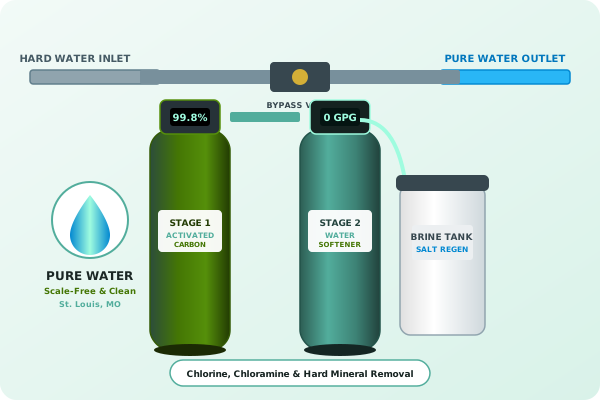
3. Point-of-Use Multi-Stage Reverse Osmosis (RO) Systems
For families seeking the ultimate in culinary and drinking water purity, point-of-use reverse osmosis (RO) systems installed beneath kitchen sinks or connected to refrigerator ice makers provide bottled-water quality straight from your tap. RO systems force water through a semi-permeable membrane with pores as minuscule as 0.0001 microns, effectively filtering out:
- Up to 99% of total dissolved solids (TDS), salts, and fluorides
- Arsenic, nitrates, chromium-6, and lead particulates
- Microplastics, pharmaceutical residues, and PFAS / PFOA ("forever chemicals")
- Remineralization stages that restore healthy alkaline calcium and magnesium for crisp, refreshing taste
4. Salt-Free Water Conditioners & Descalers
For homeowners seeking scale prevention without using salt or discharging brine wastewater, salt-free water conditioners utilizing Template Assisted Crystallization (TAC) technology provide an eco-friendly alternative. Rather than removing mineral ions, TAC media transforms dissolved calcium and magnesium into microscopic, inert crystalline structures that cannot adhere to inner pipe walls, water heater elements, or fixtures. Salt-free systems require zero electricity, zero backwashing, and zero monthly salt bag lifting.
5. Specialty Well Water Filtration & Iron Removal
Properties located on private or community wells in outer St. Louis County, Franklin County, and Jefferson County often encounter high concentrations of dissolved ferrous iron, manganese, hydrogen sulfide ("rotten egg" gas), and acidic pH levels. Specialists install chemical-free air-injection oxidation (AIO) filters, iron/manganese greensand filtration, and ultraviolet (UV) microbiological sterilizers to eradicate bacteria, coliform, and foul smells.
Water Treatment System Comparison: Choosing Your Ideal Setup
Understanding how each water treatment technology operates ensures you invest in the ideal system for your home's water quality and plumbing layout:
Our Professional Installation Protocol
Installing advanced water treatment equipment requires code-compliant plumbing execution to protect your municipal supply and guarantee leak-free longevity:
- On-Site Water Chemistry Assessment: Technicians perform comprehensive testing for hardness grains per gallon (GPG), total dissolved solids (TDS), iron concentration, and incoming water pressure (PSI).
- Precise GPM Flow & Capacity Sizing: Systems are sized based on your household's peak water demand in gallons per minute (GPM) and number of bathrooms to prevent noticeable water pressure drops during simultaneous showers and laundry cycles.
- Three-Valve Bypass Manifold Installation: Plumbers pipe in a professional brass or stainless-steel bypass loop right after your main shutoff valve. This allows effortless system servicing, filter changes, or winterization without interrupting household water supply. For whole-home piping considerations, see our Burst Pipe Repair & Home Repiping guide.
- Dedicated Air-Gap Drain & Electrical Hookup: Ion-exchange softeners require a code-approved indirect drain line with an anti-siphon air gap to prevent contamination of household drinking water during regeneration backwash.
- System Sanitization, Media Charging & Calibration: Technicians sanitize the resin tank, load filtration media, initiate the initial regeneration cycle, and program digital control heads to optimize salt economy.
Providing Water Filtration Across St. Louis City & County
Licensed water treatment contractors provide complete testing, installation, and filter replacement services throughout the Greater St. Louis area:
Frequently Asked Questions About St. Louis Water Treatment
Yes. St. Louis municipal water is drawn primarily from the Missouri and Mississippi Rivers and typically registers between 7 to 15 grains per gallon (GPG) of mineral hardness, categorizing it as moderately hard to very hard. Suburban wells and limestone groundwater pockets in St. Louis County frequently exceed 18 GPG, making ion-exchange water softeners essential for preventing scale accumulation.
A water filter removes contaminants such as chlorine, chloramines, heavy metals, volatile organic compounds (VOCs), sediment, and unpleasant odors, improving water taste and safety. A water softener specifically targets hard minerals—calcium and magnesium ions—replacing them with sodium or potassium via ion-exchange to eliminate scale buildup, protect water heaters, and stop soap scum.
No. When professionally sized and installed with a dedicated bypass valve and air-gap drain line, modern demand-initiated water softeners only regenerate when necessary, using minimal electricity and water. In fact, softened water extends the working lifespan of water heaters, washing machines, and dishwashers by up to 30%, lowering overall household operating costs.
Sediment pre-filters should generally be replaced every 3 to 6 months. Carbon filtration media and block cartridges typically require annual replacement (or every 100,000 gallons). Reverse osmosis semi-permeable membranes generally last between 2 to 4 years, depending on incoming water quality and pre-filtration maintenance.
Yes. Municipal treatment facilities in St. Louis use chlorine and chloramines to disinfect surface water. Whole-house catalytic carbon filtration systems remove up to 99% of residual chlorine and chloramines from every faucet, shower, and fixture in your home, preventing chlorine vapor inhalation during hot showers.
Yes. Independent contractors perform on-site water quality assessments to evaluate mineral hardness, pH balance, total dissolved solids (TDS), and iron content. This ensures the recommended system precisely matches your home's water profile and flow rate demands.
Explore Additional Plumbing Solutions in St. Louis
Water Heater Installation & Repair
Protect your new water heater from hard water scale with regular maintenance, tank flushes, and high-efficiency tankless installations.
Sump Pump Installation & Repair
Basement flood protection, heavy-duty submersible pumps, dual battery backups, and discharge line maintenance.
24/7 Emergency Plumber
Immediate 24-hour dispatch across St. Louis for burst pipes, sewage overflows, fixture failures, and urgent water leaks.