
Reliable Sewer Lateral Solutions for Greater St. Louis Homeowners
Your residential sewer lateral is the critical underground pipeline that channels all wastewater from your toilets, sinks, tubs, and washing machines into the municipal sewer main operated by the Metropolitan St. Louis Sewer District (MSD). Because this pipe is buried several feet beneath lawns, driveways, and sidewalks, problems often develop unseen until severe blockages cause contaminated blackwater to flood your basement floor.
Through Koo Plumbing, you are connected immediately with vetted, licensed sewer excavation and trenchless rehabilitation specialists serving St. Louis City and St. Louis County. Whether you live in a historic residence in Soulard or Tower Grove with century-old clay pipes, or a modern home in Chesterfield facing shifting subsoils, experienced contractors provide durable solutions. Call +1 314 648 0564 24/7 for prompt diagnostic dispatch.
Comprehensive Sewer Line Services Provided
Contractors in our network possess the advanced machinery and technical certifications required to handle all levels of sewer lateral rehabilitation:
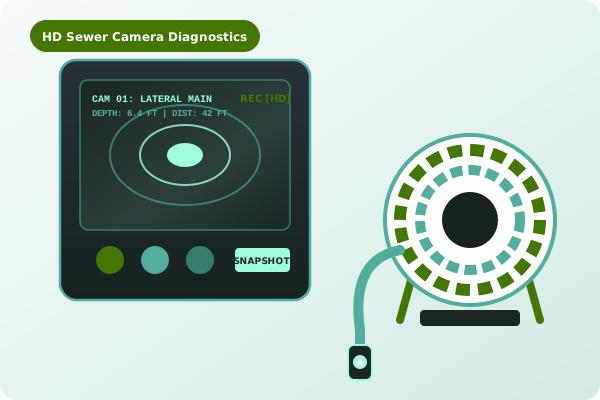
- High-Definition Video Camera Sewer Inspections: Navigating self-leveling, waterproof color cameras equipped with 512 Hz radio-frequency transmitters through your cleanout to locate root intrusion, pipe offsets, fractures, and pipe bellies with sub-inch accuracy.
- Trenchless CIPP Pipe Lining (Cured-In-Place Pipe): Inserting an epoxy-saturated resin sleeve into the damaged pipe and curing it in place, creating a seamless, joint-free structural pipe inside the old host line with an expected 50+ year lifespan.
- Trenchless Pipe Bursting: Pulling a powerful pneumatic expansion head through deteriorated clay or cast iron lines, breaking them apart while seamlessly drawing heavy-duty High-Density Polyethylene (HDPE) pipe into place.
- Commercial Hydro Jetting & Mechanical Root Milling: Blasting away dense tree root networks, calcified scale, and heavy grease clogs at 4,000 PSI to prepare lines for inspection or lining. For urgent root clearing, view our Drain Cleaning & Rooter Services.
- Traditional Excavation & Sectional Pipe Replacement: When severe pipe collapses, sinkholes, or adverse back-pitch prevent trenchless lining, licensed excavation plumbers safely dig, replace damaged sections with schedule 40 PVC, and restore the surface.
- Outside Cleanout Installations: Installing dual-directional, ground-level cleanouts with threaded caps, allowing routine maintenance and high-flow hydro jetting without bringing dirty equipment into your finished living areas.
- MSD Sewer Lateral Program Assistance: Performing the official video camera inspection, preparing digital footage and reports required by municipal lateral programs for homeowner reimbursement eligibility.
If you need to snake your main drain line every few months, you do not just have a clog—you have a structurally compromised sewer pipe. Persistent tree roots, crushed clay sections, or low pipe bellies will continue trapping solids until a catastrophic backup floods your home. An HD video camera inspection reveals the exact cause so you can fix it permanently.
Speak With a Sewer Specialist: +1 314 648 0564Comparison: Sewer Line Repair & Replacement Methods
Modern plumbing engineering offers multiple avenues to repair damaged sewer laterals. Here is how the most common methods compare:
Why St. Louis Soil and Historic Architecture Impact Sewer Pipes
The Greater St. Louis metropolitan area has distinct geographic and historical characteristics that directly impact residential sewer lines:
- Vitrified Clay Tile Joints: Properties throughout older communities—including Central West End, Compton Heights, Lafayette Square, Kirkwood, and Webster Groves—commonly feature original clay tile sewer laterals. These pipes were installed in 3-foot sections sealed with mortar. Over 50 to 100 years, the mortar decomposes. Massive mature oak and maple tree roots aggressively invade the moist joints, cracking the clay.
- Expansive Clay Soils: St. Louis soils contain high concentrations of expansive clay that swell during humid spring downpours and shrink during hot summer droughts. This cycle shifts the ground, causing rigid sewer pipes to shear, offset, or develop "bellies" (low points where wastewater and grease pool).
- Aging Cast Iron Infrastructure: Homes built in the mid-20th century frequently used cast iron pipes. Decades of acidic sewage exposure lead to channeling along the pipe bottom and interior scaling (tuberculation), which catches toilet paper and feminine hygiene products.
If your property also suffers from slow bathroom sinks, bubbling toilets, or slab leaks near foundation walls, explore our expert guides on Toilet Repair & Replacement and Leak Detection & Slab Leak Repair.
5 Critical Warning Signs of Sewer Lateral Distress
Recognizing the early symptoms of sewer line failure allows you to intervene before contaminated sewage inundates your basement:
- Multiple Drain Backups at Once: When running the washing machine causes water to bubble up in your basement floor drain or toilet, the obstruction is in your main sewer lateral, not an isolated fixture branch.
- Bubbling & Gurgling Sounds: Air trapped in the sewer line by an obstruction will force its way up through water traps, producing distinctive gurgling noises in toilets or sink basins.
- Foul Sewer Gas Odors: Intact sewer lines vent hazardous methane and hydrogen sulfide gases safely through your roof stack. If you smell rotten eggs in your basement or around your lawn, sewage is leaking beneath the ground.
- Unexplained Soggy Lawn or Indentations: If you notice an unusually lush, green patch of grass or a depression in your yard during dry weather, underground sewage is leaking and saturating the soil.
- Slow Drains Throughout the Entire House: If plunging individual sinks or toilets fails to restore rapid drainage across the home, the main line is obstructed. For rapid emergency response, contact our 24/7 Emergency Plumber team.
Homeowners in St. Louis City and participating municipalities across St. Louis County contribute to a dedicated Sewer Lateral Repair Program via property taxes. If your line experiences a structural failure (such as a collapse, offset, or break) located between the exterior wall and the public sewer main, the program can provide significant repair funding. To qualify, you must submit an official high-definition video camera inspection and an application. Independent contractors in our network can record the required video documentation, provide exact depth and locator marks, and assist you in completing the municipal submission.
Schedule MSD Video Camera Inspection: +1 314 648 0564Step-by-Step Sewer Line Rehabilitation Process
When you call for sewer service, licensed contractors follow a disciplined diagnostic and repair methodology:
- Initial Video Camera Diagnosis: A fiber-optic camera travels through your sewer pipe, relaying crystal-clear video to identify whether the issue is a simple root ball, grease blockage, cracked clay joint, or complete collapse.
- High-Pressure Hydro Jetting: The pipe is cleaned using high-velocity water jets (up to 4,000 PSI) with spinning root-cutter nozzles to strip grease and root masses, restoring the pipe's internal diameter.
- Method Selection & Consultation: Based on the pipe's structural integrity, location beneath paved or landscaped areas, and municipal codes, the contractor presents the optimal solution (Trenchless CIPP, Pipe Bursting, or Conventional Excavation).
- Execution of Repair: The chosen repair is implemented by certified technicians using state-of-the-art equipment with minimal disruption to your daily routine.
- Final Video Verification: A post-repair camera inspection verifies seamless water flow, structural integrity, and proper tie-in to the municipal sewer system.
Serving Every St. Louis Neighborhood & Municipality
Contractors are on-call across both St. Louis City and St. Louis County:
Explore Additional Plumbing Solutions
Drain Cleaning & Rooter Services
Commercial hydro jetting, mechanical snake cabling, and HD camera line locating to clear stubborn grease and root obstructions.
24/7 Emergency Plumber
Immediate dispatch across St. Louis for active raw sewage backups, basement flooding, failed sump pumps, and burst main pipes.
Leak Detection & Slab Leaks
Non-invasive electronic acoustic and infrared thermal leak detection locating underground water line breaks beneath concrete foundations.
Frequently Asked Questions About Sewer Line Repair
Trenchless sewer line repair restores or replaces underground sewer laterals with minimal digging. The two primary methods are Cured-In-Place Pipe (CIPP) lining—where an epoxy-saturated felt sleeve is inserted into your old pipe and inflated to form a seamless, joint-free structural liner—and pipe bursting, where a conical bursting head breaks apart the brittle old pipe while pulling a new seamless HDPE pipe directly in its place. Both methods preserve driveways, sidewalks, and mature landscaping.
In St. Louis City and many municipalities throughout St. Louis County, residential homeowners pay a modest annual fee on their property tax bill supporting the Sewer Lateral Repair Program (administered locally or through MSD). If an authorized video camera inspection confirms a structural failure (such as a collapse or severe break) between the building foundation and the main connection, qualifying homeowners can receive partial or substantial reimbursement. Licensed contractors in our network can perform the required video inspection and provide detailed documentation for submission.
Tens of thousands of homes in historic St. Louis communities—like Soulard, Tower Grove, Central West End, University City, and Kirkwood—were built between the 1890s and 1960s with vitrified clay tile or cast iron sewer laterals. Clay pipes were installed in short 3-foot sections sealed with mortar. Over decades, St. Louis clay soil shifts with freeze-thaw cycles, opening joints that attract thirsty roots from oak, maple, and elm trees. Cast iron lines also experience tuberculation, bottom rotting, and channeling.
Common warning signs include multiple plumbing fixtures backing up simultaneously (especially lower-level toilets and basement floor drains), gurgling or bubbling noises when water drains, persistent rotten-egg sewer gas odors inside or around the yard, soggy indentations or unusually lush green patches of grass along the lateral route, and frequent clogs that return quickly after standard snaking.
Trenchless CIPP pipelining is typically completed in just 1 to 2 days, with water service restored on the same day in most instances. In contrast, traditional open-trench excavation can take 3 to 5 days or longer, plus additional weeks and costs to repair excavated driveways, patios, retaining walls, and sod.